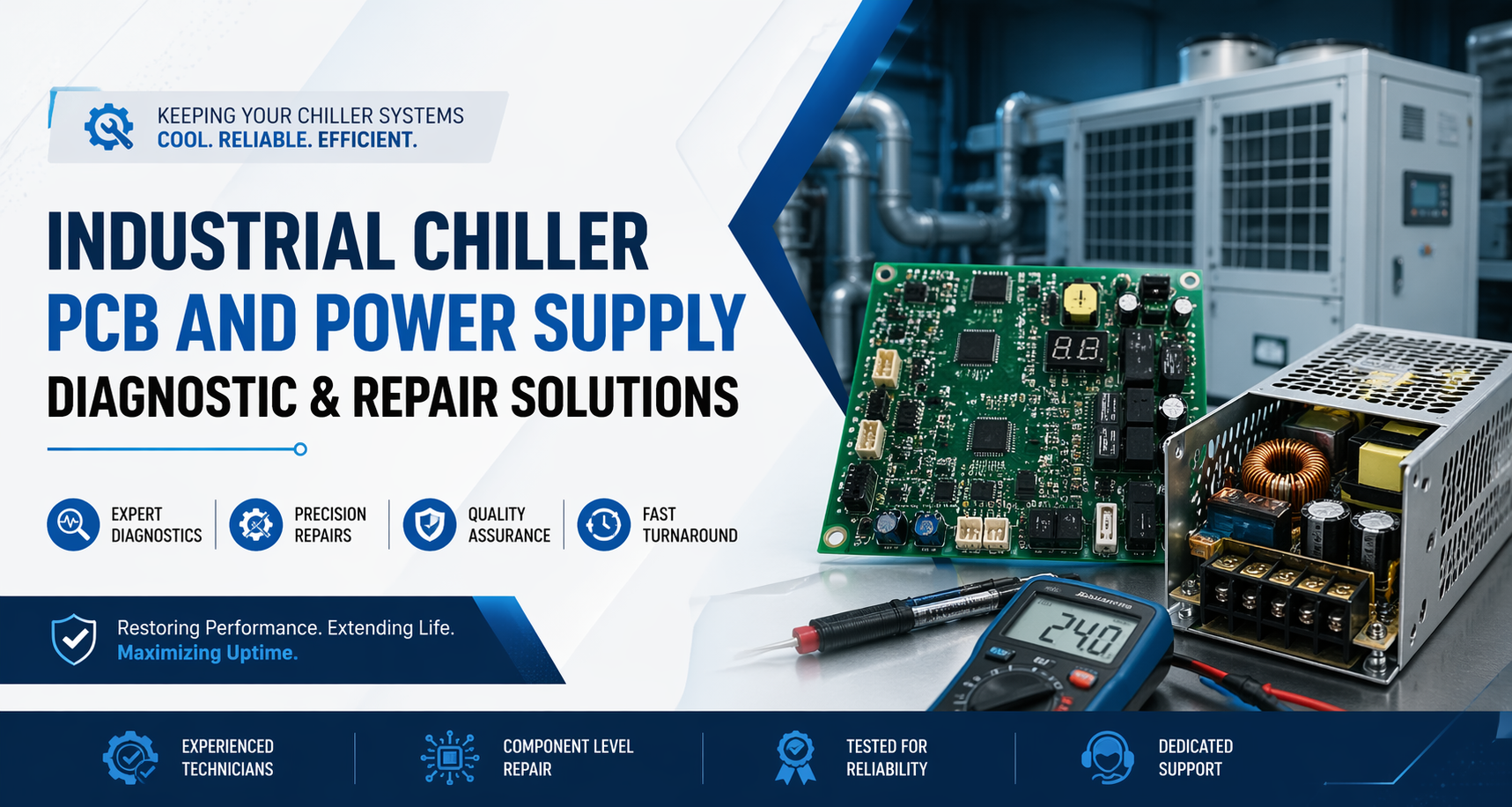
Many industrial processes depend on industrial chillers for their essential function of preserving both operational efficiency and system reliability. The Chiller PCB & Power Supply system requires all components to function properly because any malfunction will lead to operational downtime while creating efficiency problems and causing major financial losses. Industrial operations need these systems to function properly without any errors.
Modern industrial chillers rely heavily on electronic components. The printed circuit board (PCB) operates as the system's main control unit which oversees all system operations including temperature control motor management and safety system controls. A power supply failure can disrupt these functions, causing the entire system to shut down. Small faults, if their existence goes unnoticed, will progress into major issues that result in costly repair expenses or complete equipment replacement.
Maintenance teams encounter difficulties when they need to determine the chiller problems. Performance decline happens because of three main factors which include broken sensors, unintentional electrical connections, and parts that exceed temperature limits. The process of finding the actual problem needs extensive time and expenses when organizations lack suitable diagnostic instruments. The skilled technicians will determine the issue and suggest solutions which will help save time and reduce unnecessary equipment costs.
The process requires immediate action to succeed. The practice of monitoring voltage levels and current flow together with temperature readings needs to be performed regularly because it helps to identify potential system failures before they happen. Industrial facilities use predictive maintenance tools together with expert analysis to create systems which predict upcoming problems. This proactive approach helps maintain the operational life of the chiller while assuring product quality remains constant.
The process of repairing a chiller PCB requires careful handling because it involves multiple sensitive steps. The team needs to verify whether each board component functions properly. Technicians must examine capacitors, resistors, relays, and microcontrollers through detailed assessments to confirm their operational capability. The board achieves its maximum operational capacity when technicians replace all faulty components with superior quality parts. The system life extension through exact system repair methods prevents users from incurring expenses associated with complete system replacement.
Both power supply repairs and their processing require meticulous work the same way. The system experiences three typical failure modes which include voltage abnormalities and thermal destruction and component wear. The repair procedure needs to follow three essential steps which include supply cleaning and performance testing and supply output stability testing. The chiller system operates continuously while using minimal energy through this system performance design.
The manufacturing and pharmaceutical and food processing industries depend on chillers to preserve their required temperature levels. A broken chiller system creates two critical problems which include product defects and safety hazards during operations. Chiller PCB and Power Supply operation needs to function completely because it affects both efficiency and compliance with industry regulations and safety standards.
The choice of service provider directly influences service quality outcomes. The technicians possess specialized knowledge and equipment which enables them to handle complex tasks. The technicians possess the ability to identify complicated electrical problems and handle system components through both replacement and repair methods while verifying system performance through practical testing. The organization guarantees that the chiller will function correctly after its return to normal operations.
Industrial facilities experience high costs when they experience operational downtime. The production process suffers when a chiller remains non-operational for one hour which results in financial losses. The system requires quick diagnostics together with proper repair methods to achieve minimum downtime. The complete system evaluation process requires both detailed system inspection and precise solution implementation followed by post-repair system testing to evaluate system performance against its expected standards.
Chiller systems became more complicated because of technological progress yet these developments created superior methods for their repair. Advanced diagnostic tools can detect even minor anomalies, and modern repair techniques allow technicians to restore components without replacing the entire unit. The solution enables cost savings together with reduced environmental harm because it decreases electronic waste generation.
System performance can improve through both repairs and the installation of new components. The combination of updated boards and power supplies provides facilities with superior operational control together with greater system dependability and support for advanced technological developments.
Service providers who have established trustworthiness deliver both exceptional repair work and top-notch maintenance services. Melriya Technical Solutions L.L.C has extensive experience in diagnosing, repairing, and restoring industrial chillers. The technicians demonstrate their expertise by handling complicated electronic systems which results in dependable solutions that enhance equipment durability and decrease operational interruptions.
Industrial chillers serve as essential equipment for multiple industries. Chiller PCB and Power Supply maintenance plays a crucial role in maintaining operational efficiency which ensures reliable and safe system performance. The combination of expert diagnostics together with quick repairs and scheduled maintenance activities enables facilities to safeguard their assets while achieving operational efficiency and preventing expensive operational halts.
.png)